



Patent MarketPlace: Software, Apps, and Architecture Patents for Sale
 Rapid Response "Slider" for Mobile and AI Human Data (White): U.S. Patent No. 12,079,423
Why are we still filling in circles to answer questions as if we were using a pencil on paper? This still happens in customer and consumer surveys, questionnaires, political polls, and assessments. Moreover, human data annotators – by far the largest portion of any artificial intelligence (AI) company’s workforce – spend much of their time scoring AI responses on truthfulness, usefulness, safety, accuracy, and other factors. Scoring AI responses is also something AI companies wish users would do. The technology covered by this patent makes scoring faster, increases completion, and gathers more data in the process.
This patent creates a slider that gives deep data on any rating for Yes to No, 1 to 10, Unsatisfied to Satisfied, or any other scale. The surveyee makes a back-and-forth thumb-slide gesture that provides additional input concerning the user's hesitation, certainty, and waffling. The trick is that the surveyee thinks while he or she is responding, and that thinking is captured by the interface.
U.S. Patent No. 12,079,423 for “Rapidly capturing user input” would enable any AI, Large Language Model, survey, polling, or customer satisfaction tracking company to benefit from a user-delighting response mechanism that multiplies participation and increases the information measured in each response.
 Multiple Data Copy-and-Paste (Muntain): U.S. Patent No. 12,204,956
Copy and paste is one of the most widely used features in modern software – from general-purpose tools like Windows, Word, Excel, and PowerPoint to vertical applications for accounting, payroll, manufacturing, inventory management, and countless other functions. Using simple keyboard commands (Ctrl+C to copy and Ctrl+V to paste), a user can copy any piece of text or data to a clipboard and insert that content wherever it is needed. Data can even be moved across applications – copying a table from an Excel spreadsheet and pasting it into a PowerPoint slide is just one example – and the same content can be pasted into multiple locations and multiple documents.
There is, however, a major limitation: Today’s standard clipboard buffer typically stores only one item at a time. As soon as a second string of text or data is copied, the first one is lost. If the user needs that earlier content again, he or she must return to the original source and re-copy it, wasting time and disrupting workflow. This patent overcomes this long-standing constraint. The invention introduces novel clipboard architecture that allows users to copy, store, and paste multiple pieces of text or data – sequentially or non-sequentially – using a custom clipboard system integrated with event-interception Application Programming Interfaces (APIs).
This patented technology:
- Supports multiple, independently stored clipboard items instead of a single buffer
- Enables rapid pasting of multiple data elements without repeatedly returning to the source
- Works across software applications and can be extended across devices and cloud environments
- Provides software publishers with a structured API layer for seamless integration into their existing products and platforms
U.S. Patent No. 12,204,956 for “Systems and methods for transferring multiple data” can be used to create software that embeds expanded copy-and-paste functionality, enabling software developers to dramatically increase the versatility and efficiency of their applications. Power users, professionals, and enterprise customers in particular will benefit from faster data manipulation, reduced repetitive actions, and fewer workflow interruptions.
 Measuring and Reporting Customer Loyalty (Signalyx): U.S. Patent No. 10,692,097
Nothing is more valuable to a business than loyal customers who come back to buy products again and again and again. There are two challenges for every business – find one-time buyers of products and services and turn them into loyal customers who re-order and re-order – and keep them loyal so they do not even think about shopping around at a competitor. These two tasks are a significant challenge for any business, but if they are successfully executed, the result is a steady stream of sales and profits. What tools do businesses have to assist them in this endeavor?
This patent creates one. Management guru Peter Drucker put it this way: “If you can’t measure it, you can’t manage it.” The first key element in creating loyal customers and maintaining those loyal customers is knowing how many you have! This patent creates technology that does exactly that. The technology collects data on customer loyalty and reports it on a color-coded world map in real time. At any time of the night or day, corporate management can view an easy-to-understand map that reports on loyal customers for that company’s products and services. The map and colors can be easily adapted to each company’s specific needs and geographic foot print.
U.S. Patent No. 10,692,097 for a “System and method for instantly measuring and updating customer loyalty for brands on a digital world map through utilization of color and digits” would empower any software developer to create a product that virtually any company can use and profit from. Also available from the inventor is a website for collecting customer loyalty data. It demonstrates the feasibility and practical application of this patented technology.
 Profiting from Customer and Employee Satisfaction (Loyalty Triangle): U.S. Patent No. 11,449,881
Imagine how successful a business would be if it knew exactly what its customers were thinking. It could re-design its current products, and introduce new products, that precisely meet the exact needs of their customers – and their competitors’ customers. Imagine also how successful a company would be if it knew what its employees were thinking? How they felt about their employer and that company’s products and services? What incredible intelligence that would be for any company’s management team.
This patent creates technology that rewards both customers and employees for their loyalty and for sharing their input with management. If a customer has a problem, he or she can always call the company and lodge a complaint. If an employee has a problem, he or she can always contact Human Resources. Under this revolutionary technology, when a customer lodges a complaint, a built-in dashboard instantly notifies a manager so that manager or an employee can immediately address the issue and satisfy the customer. It even provides employees with on-the-spot guidance and arranges for additional training, if necessary. The system also provides immediate feedback to management on employee issues so small problems can be fixed before they grow into larger problems. When employees learn about a customer problem, they are provided with the tools needed to fix that problem, creating employees who go home from work feeling good about themselves and their company! Regardless of the industry, this patented technology improves customer and employee interactions within any company
U.S. Patent No. 11,449,881 for a “Accountability and satisfaction metrics, ethical standards, and their methods of use” can be used to create a customer and employee input and problem-fixing infrastructure that can easily be integrated into any current customer loyalty program or be used to launch an entirely new program. It would be a strategic acquisition for an enterprise software publisher, an employee or customer rewards and recognition provider, or a Human Resources or CRM consulting firm.
 Language Model that Creates Summaries of Large Content (Webfire): U.S. Patent No. 9,754,041
We are all on full data overload. Conduct a search for anything, and there are pages and pages of content. A search for “patent broker” – as just one random example – returns over eight million results! When a person needs information about a topic, the web is the logical first place to go. But how does anyone digest all that TMI data?
This patent directly addresses that very real need. It creates a fast and efficient language model that allows summaries of large amounts of content to be produced without copyright violations, and it can be run in-house on any server. It is fast and compact, so it does not need to store huge amounts of copyrighted data, just fragmented bits of data in temporary memory. This patent creates a novel way to integrate topic modeling and summarization technology to create multi-paragraph, multi-section content that flows naturally across ideas and subjects. It uses topic modeling to a perform web scraping and it uses the resulting topic model to calculate a set of initial node weights for a graph of content related to a specific topic. Finally, it applies a version of the Google PageRank algorithm to create a summary of topic-specific content. This makes it ideal for designing an SEO-friendly website.
U.S. Patent No. 9,754,041 for a “Method of automatically constructing content for web sites” actually covers two inventions – a language model and technology for finding content online that users can interact with. This patent would be a strategic acquisition for any tech business that deals with AI, language models, and/or chat technology, as well as any business that develops or manages large websites.
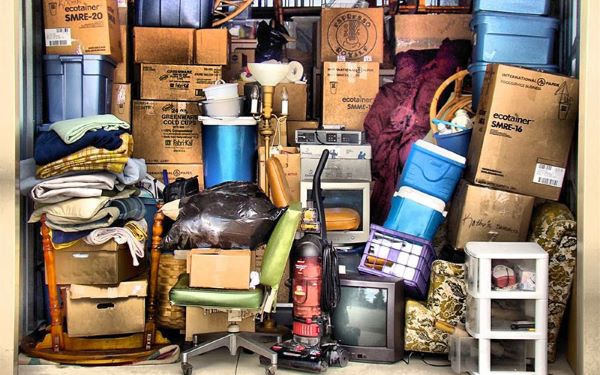 Inventory Tracking for Storage Facilities (Rapeepat): U.S. Patent No. 11,080,647
Storage facilities are everywhere. No one seems to have enough room for their stuff, so we rent storage bins at public storage facilities. There are even television series about people who bid on abandoned storage bin inventory. So how does the renter of a storage bin keep track of what he or she has put into storage. And what is in what box. This patent addresses that need.
It covers technology for storage bin inventory tracking via computer vision and digital image recognition technology through a mobile app. It enables self-storage customers to track and view which specific items they have stored in which specific boxes without having to go to the storage facility – and without having to open box after box looking for an item. The technology enables the user to create a “Box ID” and to take pictures or videos of items in a specific box or items they will be storing in a specific box. This patented technology creates a new way for individuals and businesses to manage their inventory and easily organize their assets via visual images. It can also be used to track inventory in a warehouse, basement, or other location.
U.S. Patent No. 11,080,647 for a “Computer vision and digital image scanning based inventory management system” could be used by a national chain of storage facilities to provide its containers customers with an easier way to track and retrieve what they have put into storage.
 Digital Concierge (Blufield): Two U.S. Patents
You are in Chicago for a conference, but you are unfamiliar with the area. How do you find a good Italian restaurant? Back home, you are not up to date on all the new spots to entertain friends from out of town. How do you find just the right place? You’re on vacation in Miami. Where can you find live music? You are attending a major citywide event, like a race or festival. There are so many events going on. How do you decide which one to hit next?
All these questions can be answered today thanks to mobile technology. But each will require more time and effort than is necessary. Wouldn’t it be better and much easier if when you are in any town or city, your smart phone simply filtered and curated a personalized listing of activities and businesses that are of interest to you? The best take-out. Information about the local farmers markets. The new museums. The local gyms. A liquor store specializing in wine selections. Where to charge your EV. Places to take the kids. A pet-friendly motel. All the things you need, and nothing you do not need!
This patent family creates a real-time, location-based marketing experience within a singular mobile application that connects with those merchants that provide the products and services of specific interest to you. And because your interests and moods change, you can select your interests based on categories, or your current mood, allowing the mobile application to provide those options to you in real-time. NO time is wasted surfing the web and filtering out all the things of NO interest to you. This patent family also serves as the foundation for a singular super app, allowing for coupon redemption, in-app rideshare ordering, and providing directions to your desired location – this patent family addresses it all. Select your interests on the app and you are good-to-go.
This patent family includes U.S. Patent Nos. 10,021,626 and 11,051,236 for an “Apparatus, devices and methods for content distribution and access via object-motion tracking using a wireless communications network” and it will enable its acquirer to further customize the patent-protected technology.
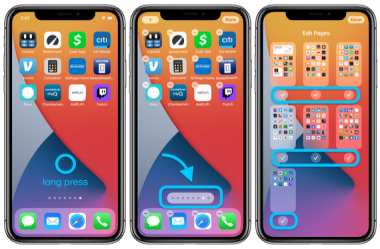 Quick and Easy App Modifications (Make Apps Better): U.S. Patent No. 10,255,044
When you install software on a PC, there are a number of install options you can select to modify the software to your exact needs. Load some modules, and not others. Select a language, time zone, and other parameters. After all, it’s your software and you have to use it. Too bad you cannot do that with a smartphone app.
Oh, yes you can. This patent addresses technology that captures a well used low code/no code mechanism to enable the user to update and modify native mobile applications for both iOS and Android devices. The user opens the app on his or her device and sees it visually portrayed in an online portal where he or she can inject additional functionality such as modifying its appearance and layout, adding a library of data, changing the messaging options, and add analytic functions. The patent enables non-technical smartphone owners to remotely edit an app’s appearance and functionality in a web console. The patent allows for the dynamic uploading of visual configurations to a remote system, rather than a cloud-based console.
This patent can be used to create a direct competitor to products such as Maxymiser, Optimizely, and Event Visualizer. U.S. Patent No. 10,255,044 for a “Method and system for modifying deployed applications” enables any app developer to create a user-friendly, but very powerful, personal app editor.
 Third-Party Certified Court Admissible Evidence (DataCerTech): U.S. Patent No. 9,875,374
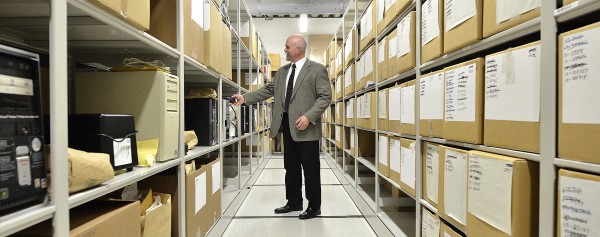
We’ve all seen a movie or television drama in which detectives went down to the Property Room or Evidence Room. It is usually a chain-link fenced in area with shelves and lots of boxes of physical evidence that is checked in or out by signing for them on a clipboard. To heighten the drama of the story line, either evidence will be missing, or evidence will be discovered that no one knew was there!
Times have changed. Yes, the police still take and store physical evidence to support criminal prosecution. Today, however, there is increasingly more and more digital evidence, especially for civil litigation. Law enforcement creates evidence while civil litigation requires proof of admissibility. The Evidence Room has been replaced with Cloud Storage that is much easier to corrupt, alter, or breach. Electronically stored information is a major concern of every attorney. It is the reason the Justice Department introduced two new Federal Rules of Evidence.
The first new rule allows digital data that is created live-at-the site to be admissible if it meets certain requirements. The second new rule allows copies of digital evidence to be admissible if it meets a different set of requirements. While the “chain-of-custody” is the same for both physical items and digital data, the process to ensure the integrity of digital data is complex. This patent follows both requirements of the new Federal Rules of Evidence and enables data to be stored and provided in a real-time-view-only format based on the granted security level and owner’s permission. This is done with no human contact that could invalidate the certifications of the data and metadata as court-admissible and/or original.
This patent covers technology for collecting, storing, authenticating, and controlling real-time access to digital data for certified court-admissibility and/or originality. It introduces the legal concepts of real-time live-at-the-scene certified admissible evidence, certifies that the files are original, verifies signatures, certifies the transparency of any digital process and result, ensures the data is only released to those who are authorized to receive it, and protects the data from a subpoena of the collection device and eDiscovery of the user’s computer system.
U.S. Patent No. 9,875,374 for a “System and method for collecting, storing, and securing data” can be used to create software that can be provided to law firms and businesses that need certified, court-admissible evidence for civil litigation.
 Advanced Internet Data Mining (Kravcik): Three U.S. Patents and Software
The data is out there. Virtually anything you are looking for is on the World Wide Web. It is out there somewhere. The challenges, however, are finding the raw data, matching up the data for each record from different sources, and then arranging all that data into a format you can use for direct marketing, market research, sales forecasting, and several other applications. One site might have a list of businesses, while other sites might have the key executives at those businesses, and yet a third set of sites have sales information about those companies. One site might have a list of boat owners, but not their addresses, while the addresses of all those boat owners might be available from 10 or 20 other websites. How would you go about collecting all that raw data, matching up the correct and relevant data for each record, and then putting that data into a usable format?
You would use software based on this portfolio. In fact, the software already exists! U.S. Patent Nos. 8,600,966 and 9,122,728 for a “Internet Data Mining method and system” and U.S. Patent No. 10,073,893 for “Internet and database mining to generate database records” cover the technology to do just that – collect data from numerous, unrelated websites, then organize, collate, and format that data into a useful database! The inventor developed software based on the invention covered by this patent family, so the company that acquires these patents and the software can go to market almost immediately with a powerful, in-demand, patent-protected product!
 Cloud-Based Vertical Search Engine (Lesavich): U.S. Patent No. 8,463,765
General-purpose search engines (Yahoo, Google, Bing, etc.) are being increasingly supplemented by vertical (or specialty or topical) search engines that focus on a specific segment of online content. Vertical search engines search selected topics to a greater depth - but to a smaller breadth - using vertical taxonomies and ontologies. The general-purpose search engines have an easier challenge since they search the entire universe of the Internet. The vertical search engines face the challenge of limiting themselves to a defined segment of the Internet, and searching that segment as quickly and thoroughly as possible while staying within the vertical sector of the search engine, but not missing any relevant search results.
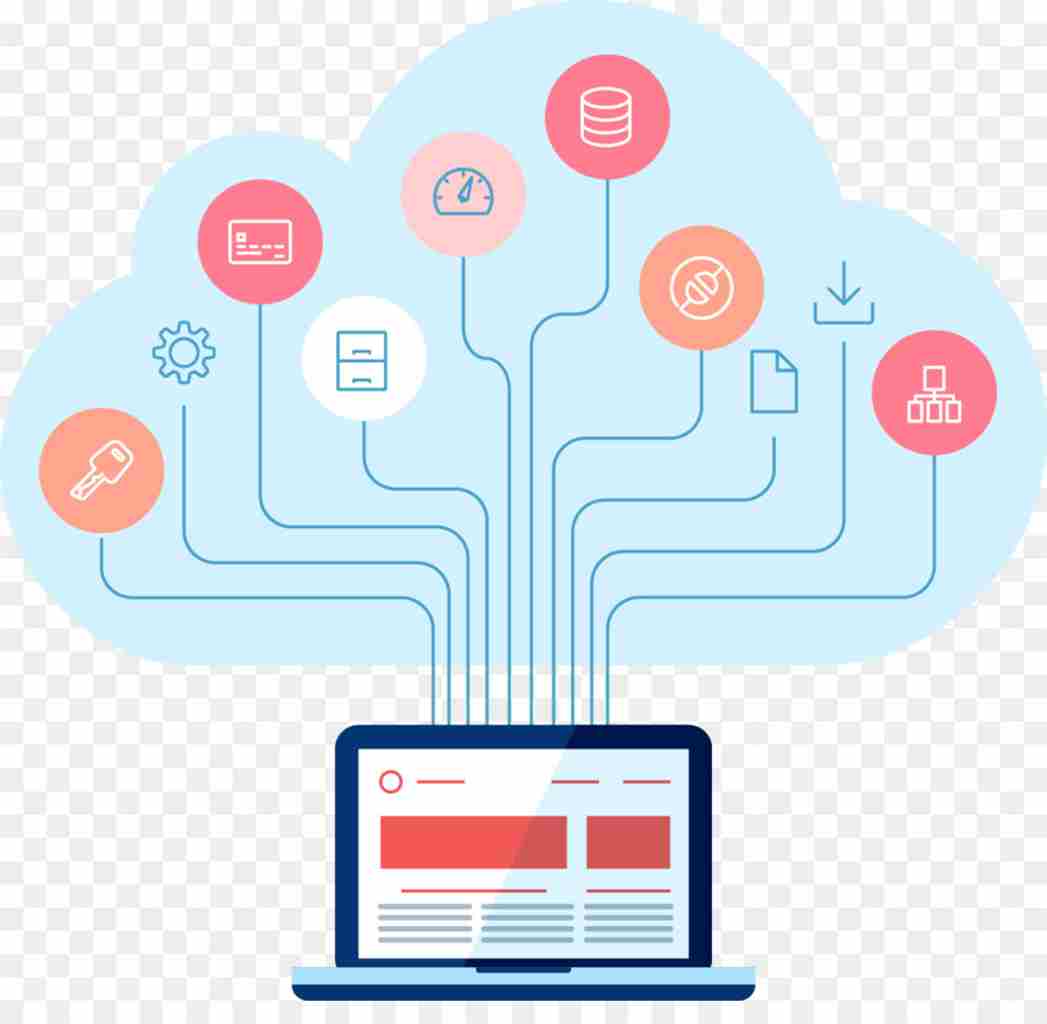
This patent directly addresses that need. It uses a cloud communications network that consists of public, private, community and hybrid networks. The vertical search engine created by this patent is a cloud application that provides on-demand vertical searches, broadband network access, resource pooling, rapid elasticity and measured search services. This invention dramatically improves the vertical search engine infrastructure by providing accurate and current vertical electronic information while using less bandwidth and less processing cycles than a non-cloud communications network. The invention covered by this patent can also be used to create user-defined, custom vertical search engines by collecting and storing information accessed from the Internet by scanning QR codes and other types of barcodes as well as other types of custom information. For example, it can scan QR codes for information about video games, plays, music, movies, and other products and events to create a user-defined, custom vertical search engine that can be re-accessed by the user.
U.S. Patent No. 8,463,765 for a "Method and System for Creating Vertical Search Engines with Cloud Computing Networks" would be an excellent acquisition for any search engine company or online business looking to improve its product’s market niche performance, or for a general search engine provider that wants to expand its base and offer new and unique vertical search services for selected users.
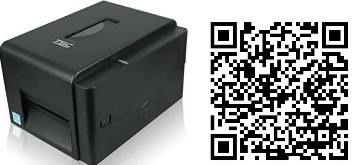
 Foundational Coding, Scanning, and Printing (Cobblestone Software): Two U.S. Patents
Putting digital data onto paper is a common, everyday occurrence. But to get where we are today, technology was needed that would present digital data on a substrate, increase the density at which digital data can be represented on a substrate, and both write and read digital data on paper and other media using off-the-shelf personal computers and peripherals. Additionally, the features and parameters that contribute to density of information on a printed substrate must have full generality in formatting and decoding.
This foundational portfolio covers technology that achieves the maximum density possible for any particular combination of printer and scanner, and does so in a maximum density. It enables flexibility in printing digital data onto a substrate by formatting digital data into a pattern whereby the pattern comprises a number of cells with known dimensions. Each cell conveys at least one bit of data by the presence of spot with a given set of attributes, and a second logical state is expressed by the absence of a spot with those attributes, while the sizes of spots may be different from the size of the cells containing those spots.
U.S. Patent Nos. 6,820,807 and 8,281,999 for “Variable formatting of digital data into a pattern” covers the foundational technology used for QR codes and for scanning, sending, and printing documents. Fourteen Claim Charts are available upon request that illustrate evidence-of-use by commercial website operators, social media sites, printing technology companies, and telecom firms.
 High-Speed, Truly Random Number Generator (Scarlett): International Patent Portfolio
There are random acts of kindness, but there is also a need for randomness for many computer applications – from running simulations to encryption to artificial intelligence (AI) applications. The invention covered by this portfolio uses birefringent splitting, a process that is quantum mechanical in nature and known to be unpredictable. A series of layers take a beam of photons and randomly shuffle the energy so that the output is a random light intensity. Pairing this with a pixel detector produces 250 simultaneously streams of 1-2GHz random data.
Patent Portfolio
- U.S. Patent No. 9,971,568: Generation of random numbers through the use of quantum-optical effects within a mirror cavity system
- European Patent 3265906: Generation of random numbers through the use of quantum-optical effects within a mirror cavity system
- Japanese Patent 6730333: Random number generation using quantum optical effect in mirror cavity system
- Chinese Patent 107408033: By using the generation of the random number of the quantum optices effect in mirror chamber system
There is currently no device that meets the random data requirements of high-performance computers. The device created by this invention will permit its integration into data centers, or it could be scaled down to a chip-level device that can be incorporated into numerous computing solutions. This portfolio provides an opportunity for high-performance super computer manufacturers, chip manufacturers, fiber optics infrastructure providers and hard drive providers to provide an added-value service for its customer base.
 Improved Internet Searching of News Items (Barhon): U.S. Patent No. 8,589,373
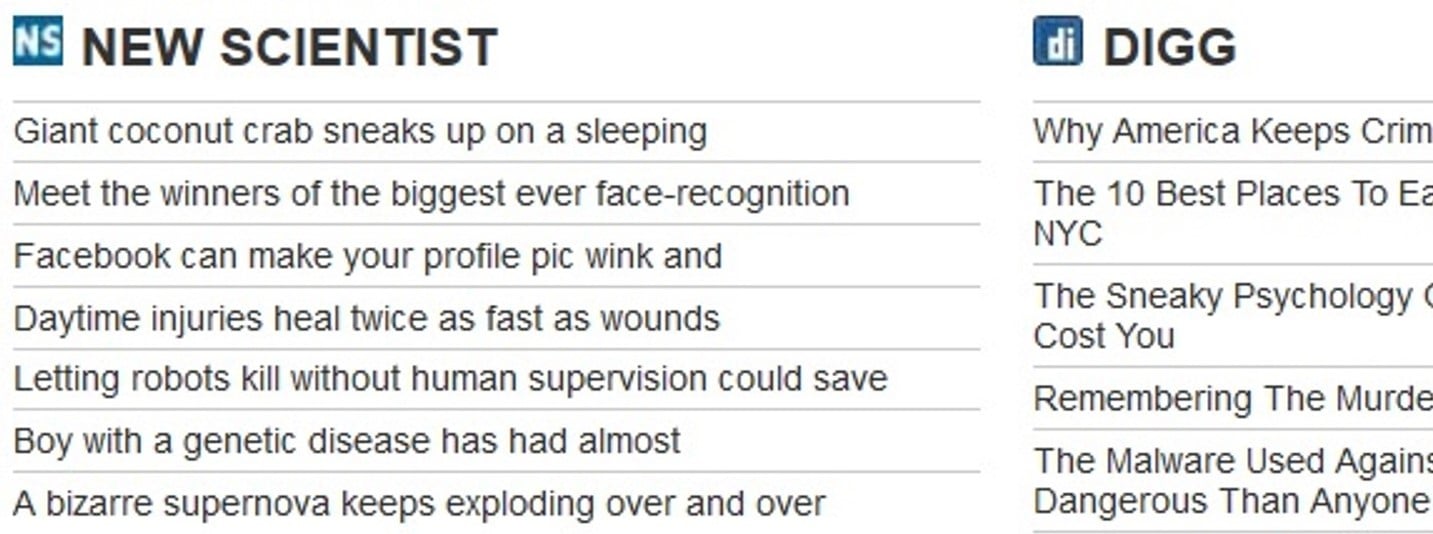
There is no shortage of information – it is all out there on the web…somewhere. The challenge is finding and retrieving it in a timely manner. The invention covered under this patent provides dramatically improved searching on the Internet, especially searching for news items and/or creating an auto-generated newspaper. The invention creates “recursive clustering” under which the user can – at any level in the tree – either choose a specific news item from the cluster or from the shown sub-clusters or continue in the tree. This patent also includes an improvement that enables searching by keywords to generate an automatic newspaper. And the patent also includes other features such as requesting images or video, updating of headlines, multi-level sub-clustering, setting time limits on the search, and marking certain news items as no longer of interest.
U.S. Patent No. 8,589,373 for a "System and Method for Improved Searching on the Internet or Similar Networks and Especially Improved Metanews and/or Improved Automatically Generated Newspapers" has a 2003 Priority Date and 17 Forward Citations. Evidence-of-Use is available upon request. This patent would be a strategic acquisition for search engine or online news summary provider.
 Secure/Non-Secure Video Conferencing Switch (3E Technologies): Four U.S. Patents
This portfolio relates to computer security systems consisting of an integrated switch for secure and non-secure video conferencing. The technology disclosed in these patents provides the following advantages:
- User-defined option for selecting secure or non-secure mode
- Improvised security in video conferencing
- Easy and effective encryption techniques
- Multi-point messaging across time zones and international boundaries
- Reduced travel costs while maintaining face-to-face contact
| Patent No. | Description |
|---|---|
| 7,519,298 | VWS secure/non-secure bypass switch |
| 7,539,421 | Self-contained secure videoconferencing console |
| 7,623,149 | Integrated secure encryption apparatus |
| 8,103,169 | VWS secure/non-secure bypass switch |
This portfolio would be a strategic acquisition for a provider of video conferencing and distance learning services as well as a manufacturer of video conferencing equipment, telemedicine systems, telepresence devices and other electronic products.
 Statistical-Pairs Arbitrage Technique (Sutton): U.S. Patent No. 8,533,098
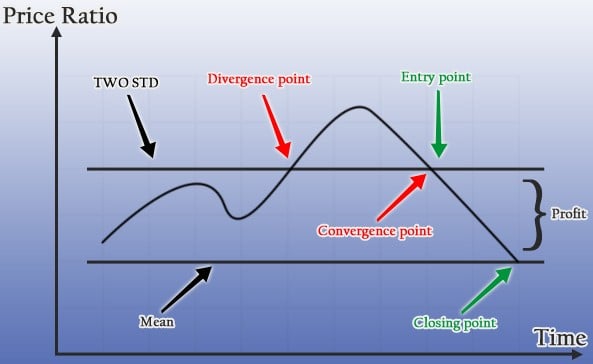
This patent teaches a technology for automated trading system and a methodology for real-time identification of statistical arbitrage market opportunities, providing several advantages:
- Perform statistical-pairs arbitraging in a dynamic marketplace with less risk than prior art approaches
- Employ an array of recent data and performance ratios involving bid and ask prices for correlated items, such as stocks, futures, equities, commodities and other instruments
- React to real-time market data and automatically execute trades starting from the basic correlated pairs-trading model
- Determine buy and sell signals by a unique method of measuring statistical deviation from a historical relationship during a traveling time span of Best Bid-Offer (BBO) data to the current bid/offer price
U.S. Patent No. 8,533,098 for an "Automated trading system and methodology for real-time identification of statistical arbitrage market opportunities" would be a key acquisition for investment banks, hedge funds, asset management groups, and other asset management groups, as well as quantitative and algorithmic trading software developers.
 Graphical, Multidimensional Password Creation (NIC): U.S. Patent No. 8,347,103
This patent enables users of a device or computer system to create a password by selecting from a series of graphical images that each include one or more associated attributes. A password is created not from letters and digits, but from the combination of attributes of the selected images. Additionally, the graphical password includes time, motion and/or keyboard input attributes so the password in multidimensional. This patent is a likely acquisition for computer hardware OEMs as well as developers of security, anti-virus and operating system software.
U.S. Patent No. 8,347,103 for a "System and method for authenticating a user using a graphical password" would be a valuable acquisition for any developer of e-commerce, financial, or security software products.
 Multi-User Database Management (Peled): U.S. Patent No. 8,195,621
This patent covers a software system for managing database format and structure modifications in a multi-user environment. It provides a number of services to the users of a database that prevent the database from responding in an unexpected manner to simultaneous conflicting changes. In addition, a version control service allows changes to be reversed without loss of data. This patent would be a valuable acquisition to any business – from financial institutions and manufacturers, to online and brick-and-mortar retailers – that must maintain a large database that is regularly accessed by multiple users.
U.S. Patent No. 8,195,621 for a "Database schema management system" would be a critical acquisition for any publisher of mult--user database software.
 Knowledge Driven Software Architecture (Zhuk): Two U.S. Patents
This portfolio is a potentially valuable asset for software development companies that require changing scenarios to be directly included in a software application, and for the companies involved in development of intelligent multi-robot systems having adaptive behavior models. The system learns the changing scenarios on the basis of inputs supplied by a subject matter expert. Further, the technology describes a system that allows an expert to provide the input in ontology language (which is closer to natural language) and translates the input to figure out a user’s intent. The system can learn new rules at run time to match the expert’s expectation.
U.S. Patent No. 7,774,751 for “Knowledge-driven software” and U.S. Patent No. 7,966,093 for "Adaptive mobile robotics system with knowledge-driven software” would be a strategic acquisition for any developer of robotics software.
Patent Brokerage Prospectus: Contact [email protected] to receive an analysis of each portfolio that includes:
- Executive Summary
- Patent Overview and History
- Technology and Investment Summary
- Market Research
- Company Analysis
- Illustrative Evidence of Use (if applicable)
We offer patents in these technologies:
- Agricultural
- Apparel and Shoes
- Artificial Intelligence
- Automotive/Vehicular
- Aviation
- Banking/Financial Services
- Beverages/Foods/Nutritional Products
- Boat and Marine
- Cannabis and Medical Marijuana
- Construction/Building Trades
- Consumer Electronics
- Consumer Products
- Digital Currency/Cryptocurrency
- Drones/UAVs
- E-Cigarette & Vaping Technology
- E-Commerce
- Education & Training
- Energy/Power Generation
- Exercise Equipment
- Health and Beauty Products (HBP)
- Human Resources
- IoT Patents/Internet of Things
- Manufacturing
- Medical Electronics and Devices
- Mining/Drilling
- Mobile/Wireless
- Network/Location-Based Services
- Optics/Displays/Video/LED
- OTT Patents/Over-the-Top
- Packaging
- PCs and Notebooks
- Pharmaceuticals
- Robotics/Automation
- Semiconductor
- Smart Home/Smart Office
- Social Media
- Software, Apps, and Architecture
- Sports/Sporting Goods
- Telecommunications/IP Telephony
- Warehousing/Material Handling
- Other
- Go to Patent Index
- Return to Patent MarketPlace
